What Is Cork?
Cork is the bark of the cork-oak tree (Quercus suber), a 100% natural and eco-friendly material. It is composed of microscopic, honeycomb-shaped cells filled with a gas mixture almost identical to air. This botanical tissue is unique for its sustainability and versatility in various industries. The cell walls are primarily made up of suberin and lignin, making cork a highly durable and natural material.

100% Natural & Sustainable Cork
Cork is a 100% natural raw material, which means that it can be 100% recycled and reused at, where cork is stripped from the trunk of the tree without damaging the cork oak.
Cork is 100% recyclable, even if it has been made into cork stoppers, it can be churned and reintroduced into the production process at, where the resulting chips can be used to make other products, such as shoes, siding, fishing buoys and more.
Unmatched Properties
Nature engineered cork into a performance material no synthetic can truly rival. Harvested responsibly from cork‑oak bark, every cubic centimeter houses around forty million air‑filled cells that work together to insulate, cushion, repel moisture, and resist fire—while remaining feather‑light and fully recyclable.
Thermal & Acoustic Insulation
About 40 million closed cells per cm³ absorb sound and store heat, giving cork exceptional noise‑dampening and energy‑saving ability.
Ultra‑Lightweight
With a density near 0.16 g/cm³ and over half its volume filled with air‑like gas, cork is light enough to float.
Fire‑Resistant
Naturally flame‑retardant, cork smolders without open flame and releases no toxic fumes, acting as a built‑in fire barrier.
Impermeable
Suberin and lignin block liquids completely and gases almost entirely, ensuring long‑term moisture and shape stability.
Antistatic & Hypoallergenic
Cork repels dust, deters mites, and reduces common indoor allergens—ideal for health‑sensitive spaces.
Elastic & Compressible
Gas‑filled cells work like springs; cork can compress to half its volume and rebound instantly without bulging elsewhere.
Abrasion‑Resistant
Its resilient honeycomb structure cushions impacts and slows wear, outperforming many hard‑surface materials.
100 % Natural & Sustainable
Harvested repeatedly without harming the tree, cork is fully recyclable, biodegradable, and eco‑friendly.
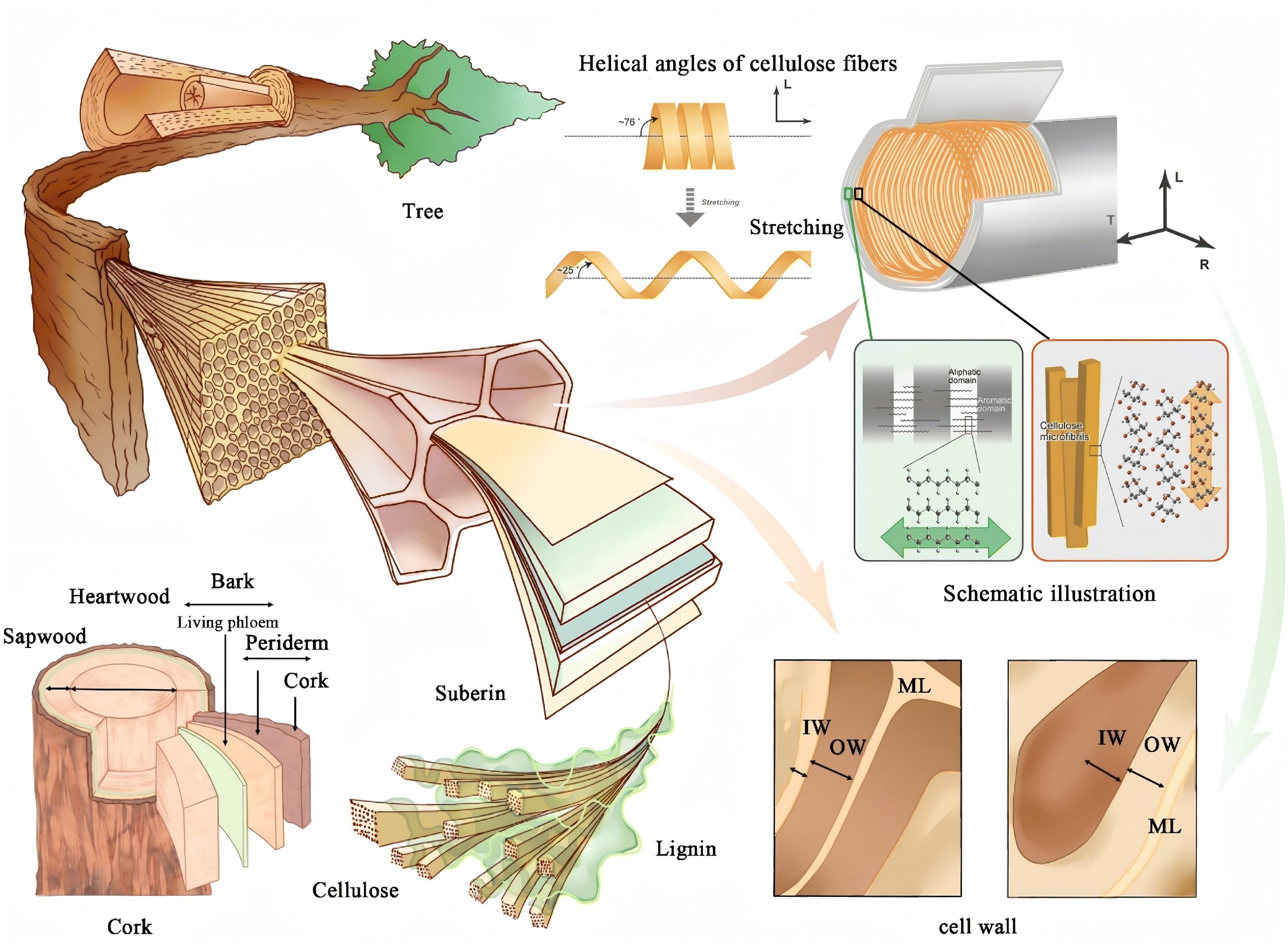
Chemical Structure of Cork & Suberin Science
Cork consists of pentagonal or hexagonal honeycomb cells—about 40 million per cm³, roughly 800 million in a single natural wine cork.
Its principal component is suberin, an organic acid mixture coating the cell walls that blocks water and gas transmission. Suberin is heat‑resistant and insoluble in water, ethanol, ether, chloroform, concentrated sulfuric acid, and hydrochloric acid.